You shouldn't be the only one who notices.
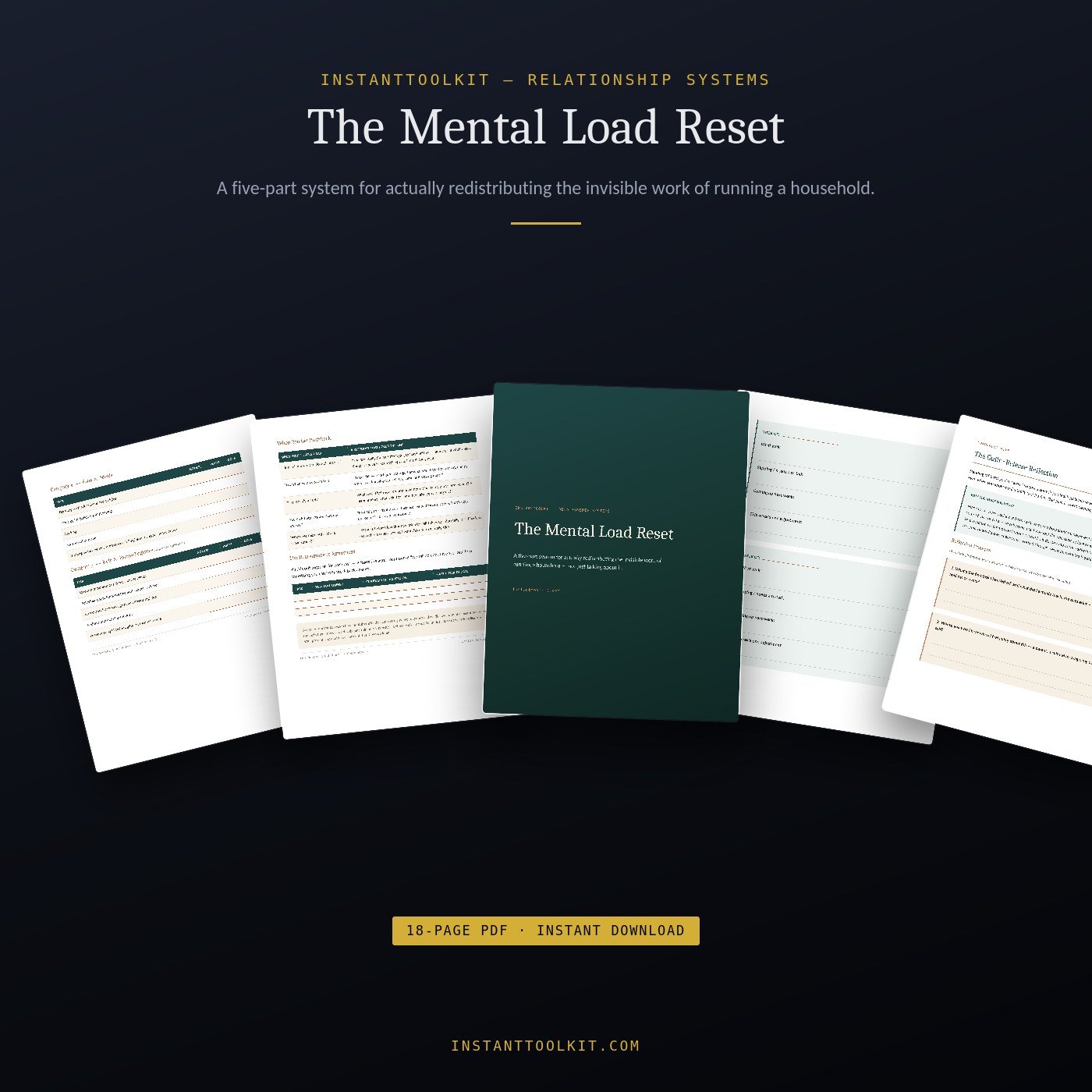
The Mental Load Reset is a 5-part system for handing off full ownership of household tasks — not just the doing of them, but the noticing and the planning too.
You're not imagining it.
You didn't just do the laundry — you noticed it needed doing, decided when, and remembered the delicates go separately.
You didn't just "forget to ask him" — you're the one who has to remember to ask, every single time, or it doesn't happen at all.
You've started to wonder if you're the problem. Too controlling. Too demanding. Expecting too much.
You're not. The work you're doing has a name — and it's measurable, and it's real.
Most "share the load" advice doesn't actually redistribute anything.
Validation journals help you feel less guilty about carrying it all. They don't change what you're carrying. The Mental Load Reset is built around a different idea, popularized by Eve Rodsky's Fair Play: real sharing means one partner owns a task's noticing, planning, and doing — not just the doing.
"Tell me what to do and I'll do it" isn't equal partnership. It just moves the doing. This kit is about handing off the whole thing.
Tap a task. See where the load actually sits.
This is a simplified taste of Component 1 — The Full Load Inventory. In the full kit, you map your own household across 6 categories.
Illustrative example — not survey data. Component 1 helps you map exactly this for your own household, task by task.
Five components. One system.
 1
1
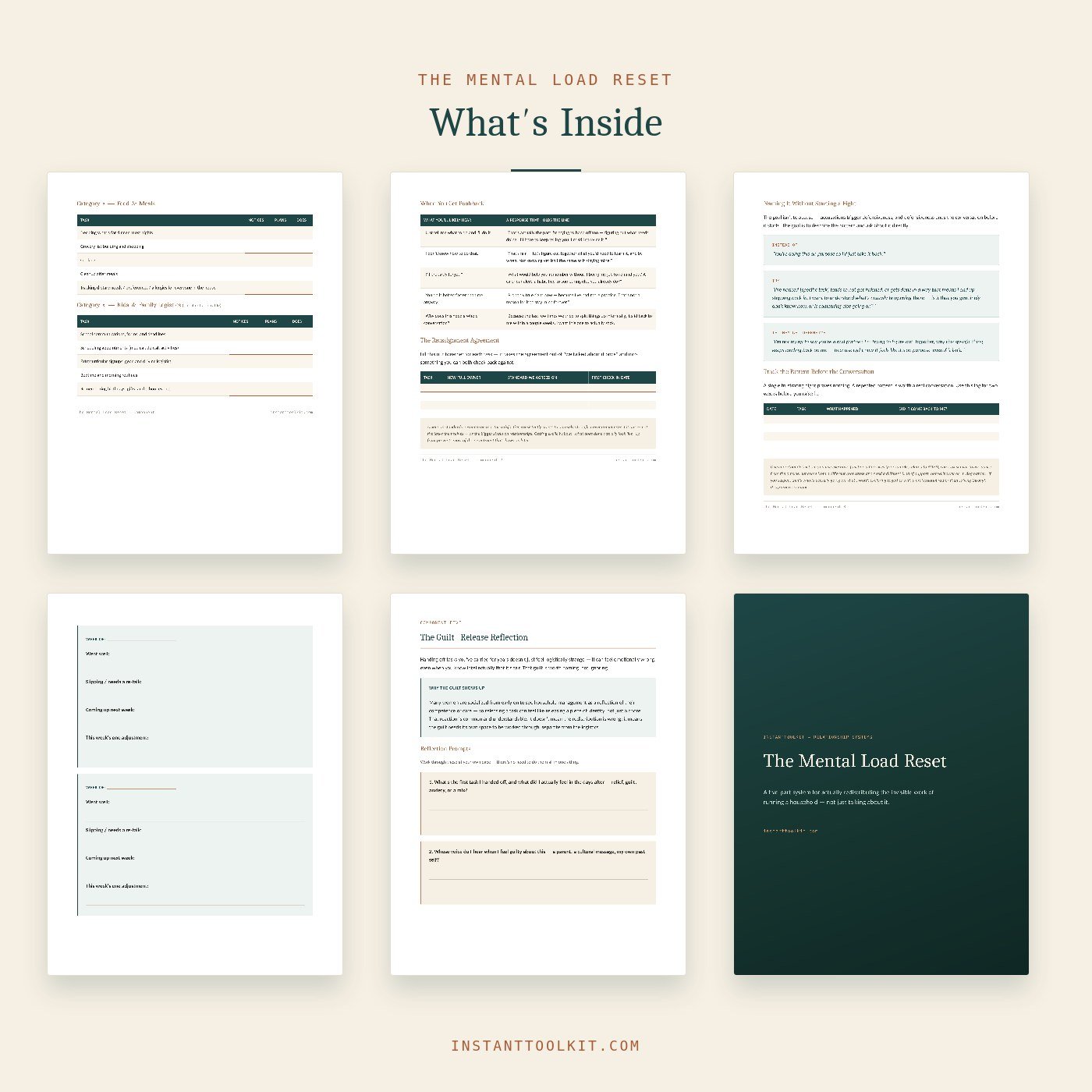
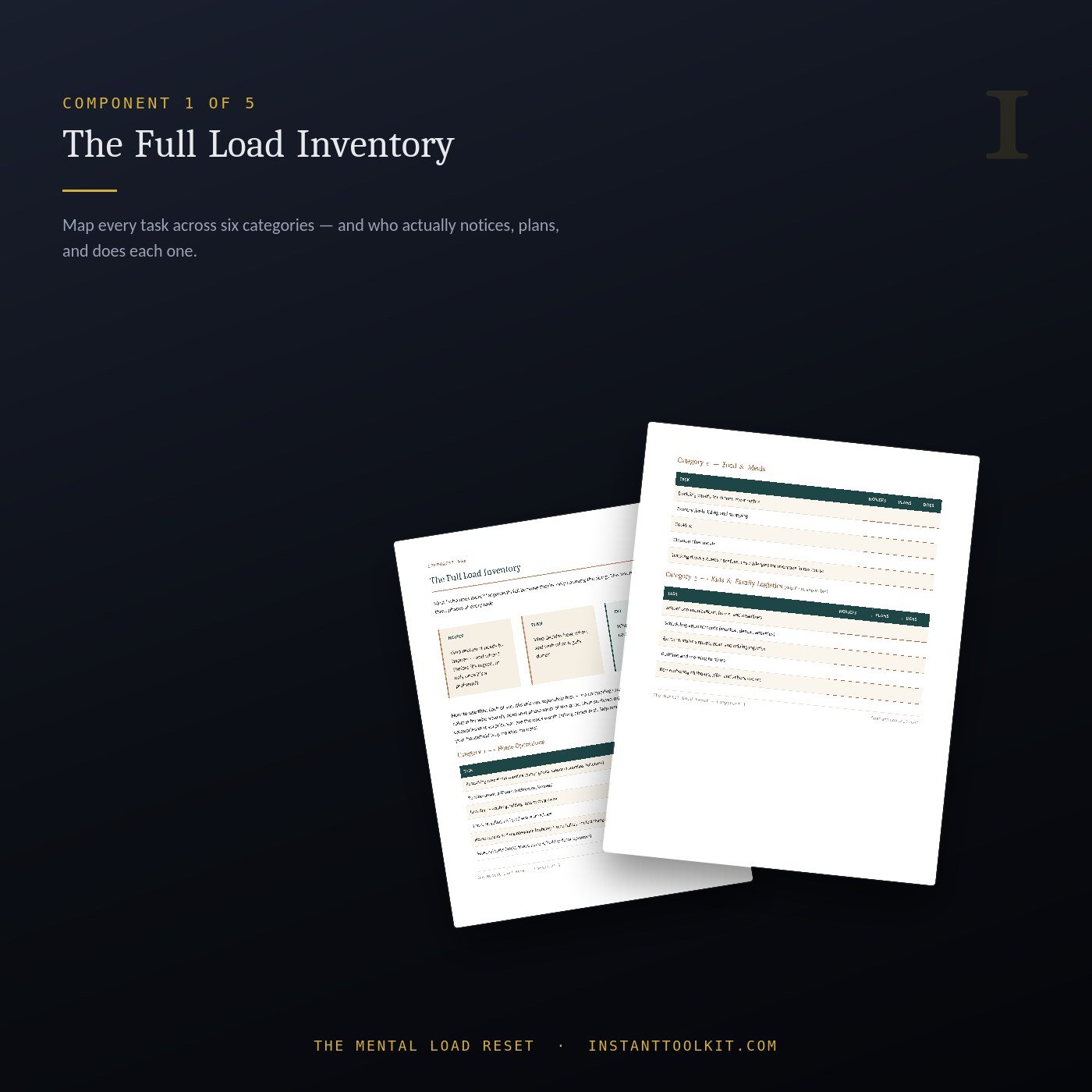
The Full Load Inventory
Map every task across 6 categories — Home, Food, Kids, Money, Social, and Self — and who actually notices, plans, and does each one.
 2
2
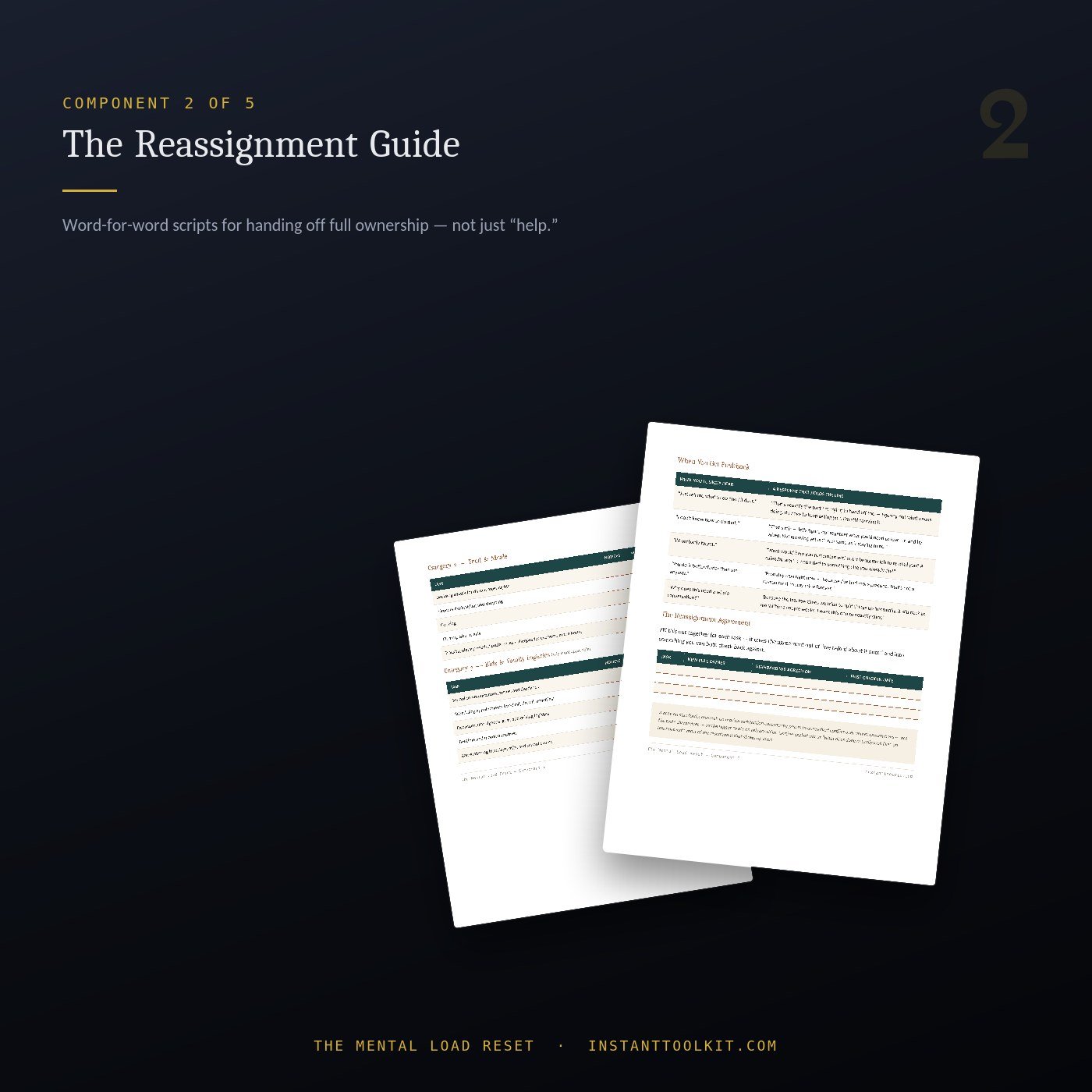
The Reassignment Guide
Word-for-word scripts for handing off full ownership of a task, a pushback-response table, and a signed agreement template.
 3
3
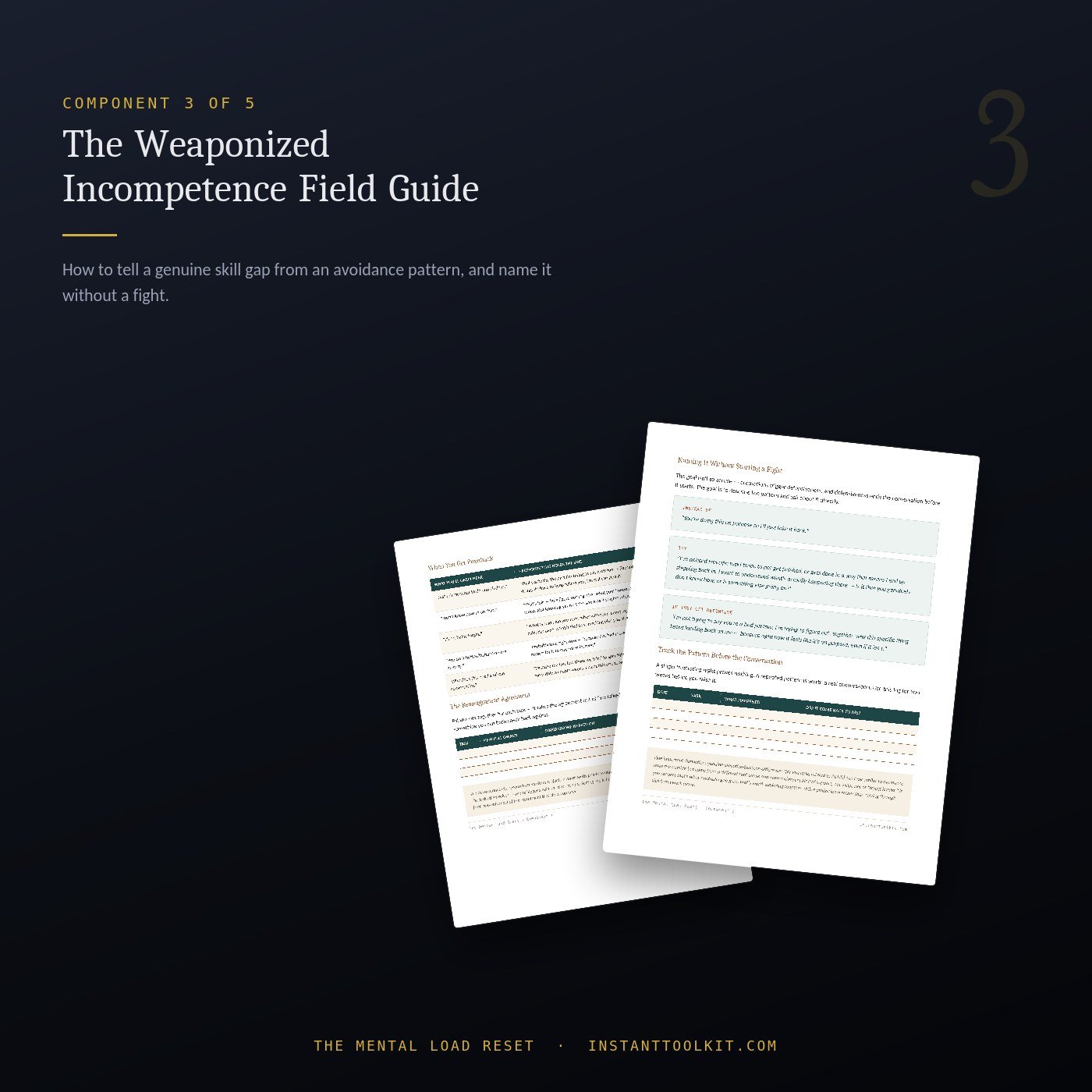
The Weaponized Incompetence Field Guide
Tell a genuine skill gap from an avoidance pattern, track it over two weeks, and name it without starting a fight.
 4
4
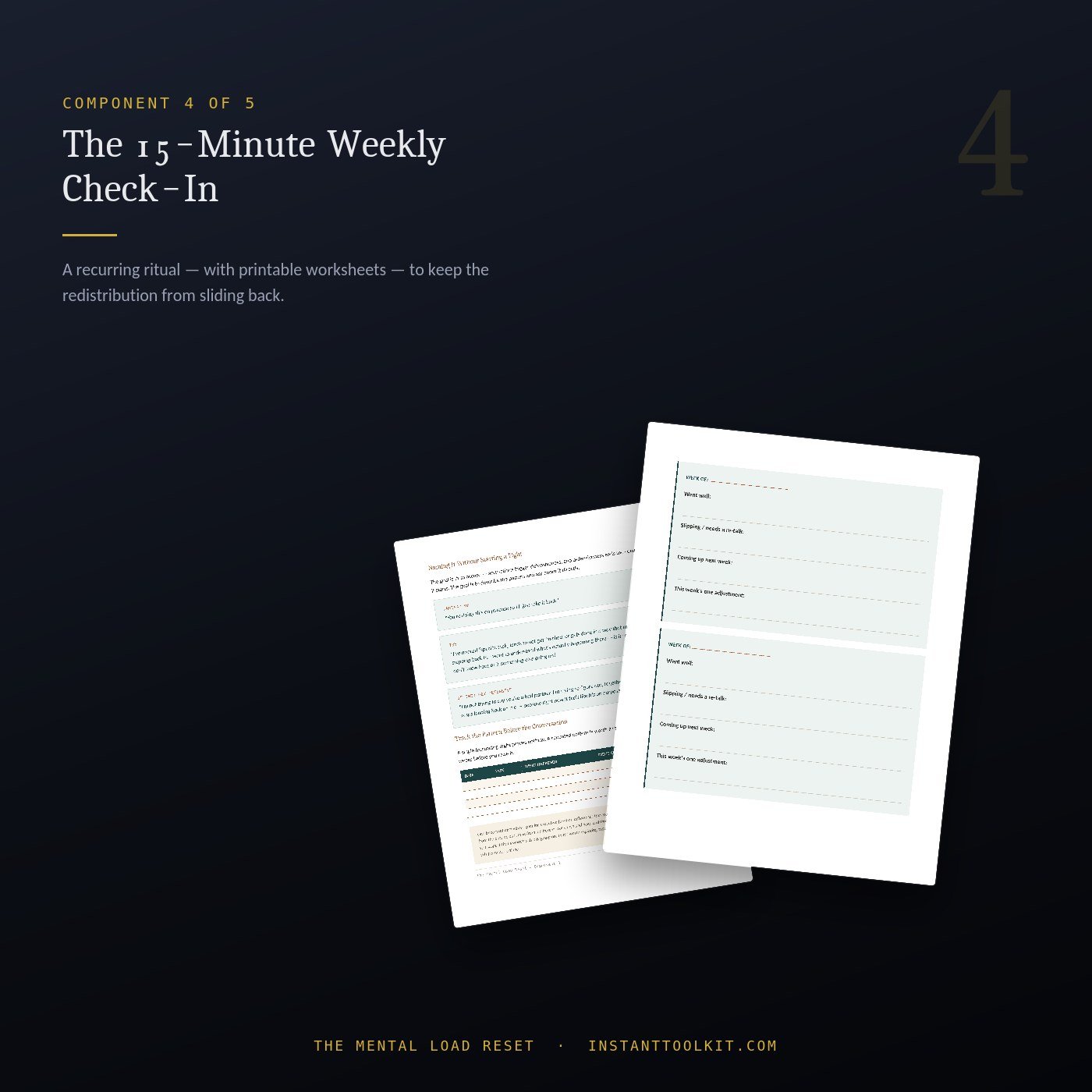
The 15-Minute Weekly Check-In
A recurring ritual with a fixed agenda and 4 printable worksheets, so the redistribution doesn't quietly reset by week three.
 5
5
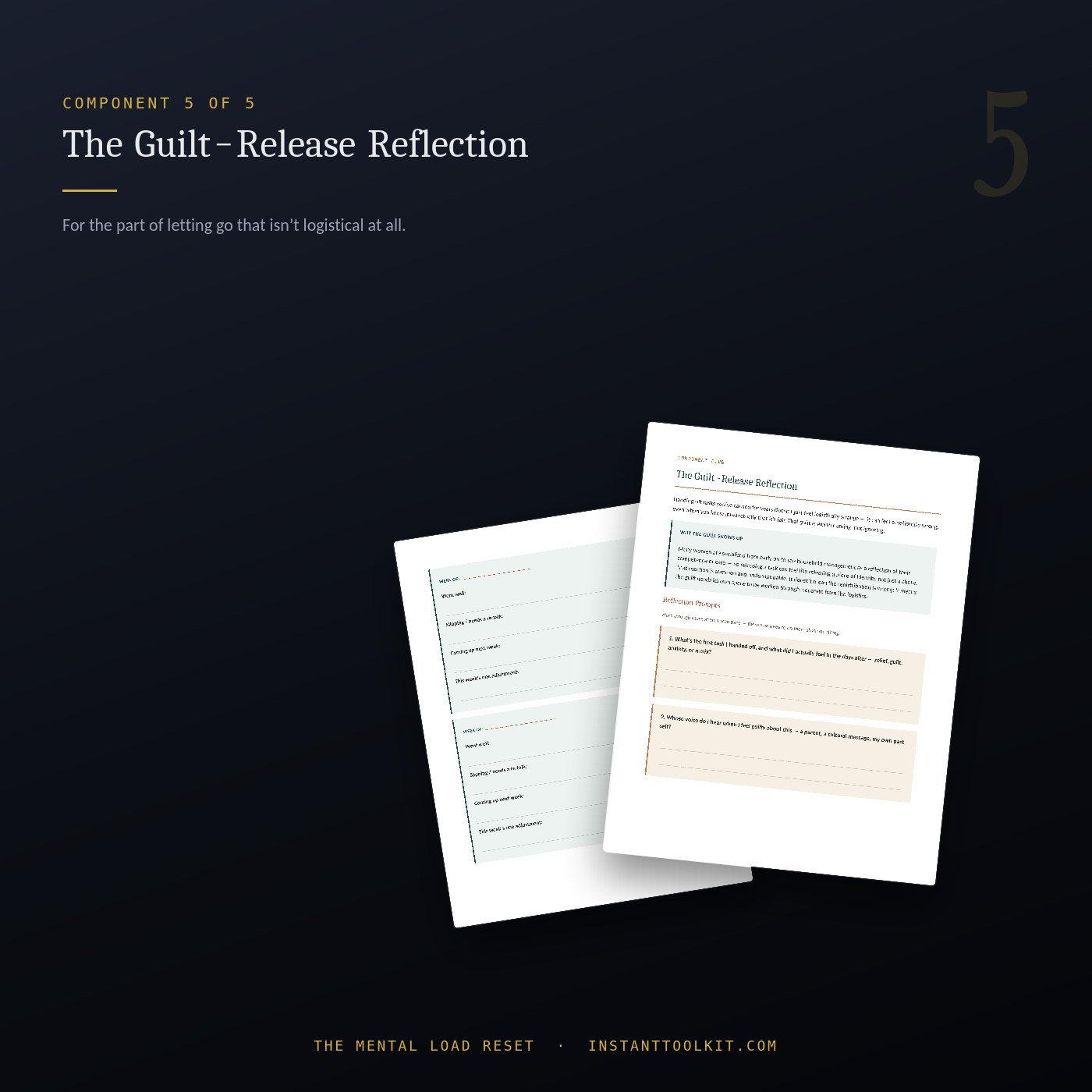
The Guilt-Release Reflection
For the part of letting go that isn't logistical at all — six reflection prompts on where the guilt comes from, and why "good enough" is enough.
Every framework in this kit traces back to something real.
Task-division stats sourced directly from the U.S. Bureau of Labor Statistics' 2024 American Time Use Survey — not a content-farm statistic.
The Notice / Plan / Do structure is our own tool, built around the core idea popularized by Eve Rodsky's Fair Play (2019) — full credit, no card-deck reproduction.
The skill-gap-vs-avoidance distinction in Component 3 draws on clinical psychology's definition of weaponized incompetence, not internet folklore.
Before you get it
It's designed as a printable — every worksheet has generous write-on space. Print what you need, when you need it. The weekly check-in includes 4 ready-to-copy instances to start.
It's built around short scripts and a 15-minute weekly structure specifically because most people won't sit down for a long journaling session. The scripts are designed to be said out loud, not written first.
Fair Play is a full book-and-card-deck system, and if you want the deepest version of this method, it's worth reading directly. This kit is a standalone, original system inspired by the same core idea, built to get a real conversation started this week without needing the book or the card deck first.
Yes. The Kids & Family Logistics category is explicitly marked as skippable. The other five categories — Home, Food, Money, Social, and Self — apply to any household.
No — it's a communication and planning framework. If your relationship is dealing with significant conflict or distress, please reach out to a licensed therapist; this kit is a tool, not a replacement for professional support.
Refunds are accepted within [X days] of purchase — see our full refund policy for details.
The Mental Load Reset
5 components · 18 pages · Instant PDF download
This kit offers communication frameworks and structured planning tools. It is not therapy, counseling, or a substitute for professional support.